


In this article, we will uncover -
Apple’s journey from a pure hardware to a hardware + software enterprise
Strategic rationale for strengthening its services portfolio
Overview of Apple’s services portfolio
Future growth outlook & risks
The first thing that comes to mind when thinking of Apple is the iPhone, iPad, AirPods, MacBook, and so on. Hence, for the very first time I saw the graph below, I was astonished. Does Apple have a bigger business than selling its beautifully designed hardware? This curiosity helped me dig deeper and reach a conclusion that Apple has a great business model for selling hardware, but the business model has a fundamental flaw, and this flaw doesn’t bode well for Apple’s growth plans.
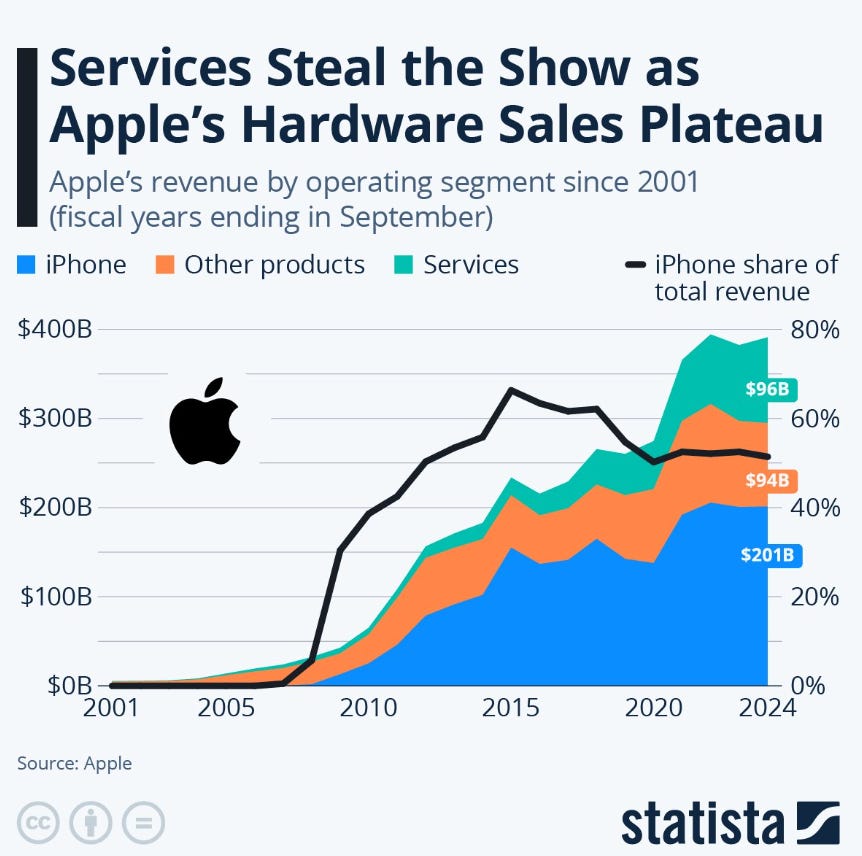
With hardware as the sole focus, Apple operated on a transactional business model centred on the periodic sale of high-value hardware. However, as the global smartphone market reached saturation and breakthrough hardware innovations became less frequent, device replacement cycles naturally began to lengthen. Consumers, satisfied with the advanced capabilities of their existing devices, started holding onto them for longer periods. This trend posed a direct threat to a business model reliant on frequent hardware upgrades.
And yes, this hypothesis did turn out to be true if one starts looking at the revenue growth coming in from the iPhone sales.

To solve this ordeal, Apple toyed with the idea of enabling services. Services offer a very prudent choice for Apple to not only grow faster than by just selling hardware devices but it also helps them in creating a walled garden, which can lock in the user till perpetuity. Moreover, this was recurring revenue and predictable revenue, hence protecting Apple against any sudden shocks coming in due to the launch of a new device, either by them or their competitors.
If you really want to understand Strategy in depth and Crack Strategy Interview Questions, you need to check out this book. 5/5 Rated, and it is helping so many people get job Offers. ( Like this post if you have read till here )
Apple has created this immaculate plan of acquiring a customer through the purchase of hardware, later turning them into a source of recurring revenue. Apple’s strategy can be essentially broken down into three steps:
The cycle begins with world-class hardware, like the iPhone, which attracts a massive user base
These users are then introduced to deeply integrated software and services—such as iCloud for backups and the App Store for applications—which enhance the functionality and value of the hardware
As users invest more time and money into these services, their digital lives become deeply enmeshed in the Apple ecosystem, making the hardware more indispensable and creating powerful incentives to purchase future Apple products
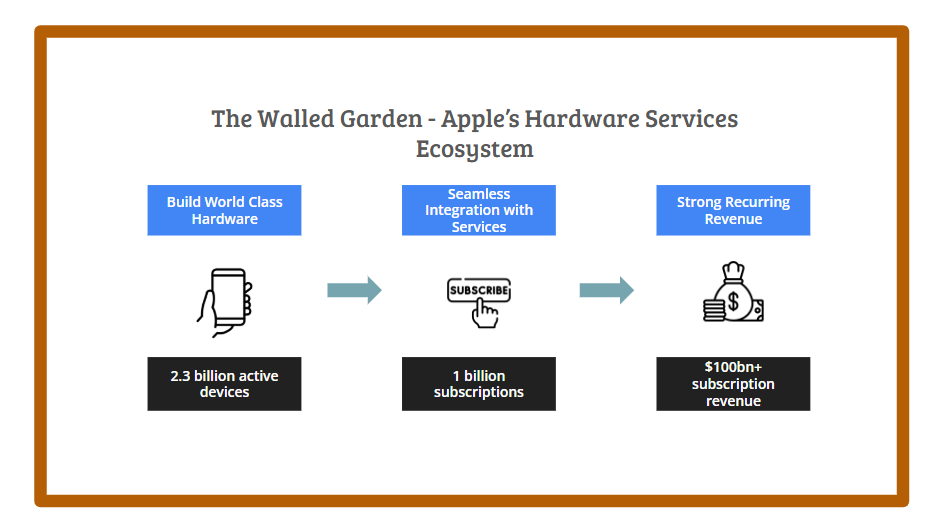
This seamless interplay is a core tenet of the company's philosophy, as articulated by CEO Tim Cook -
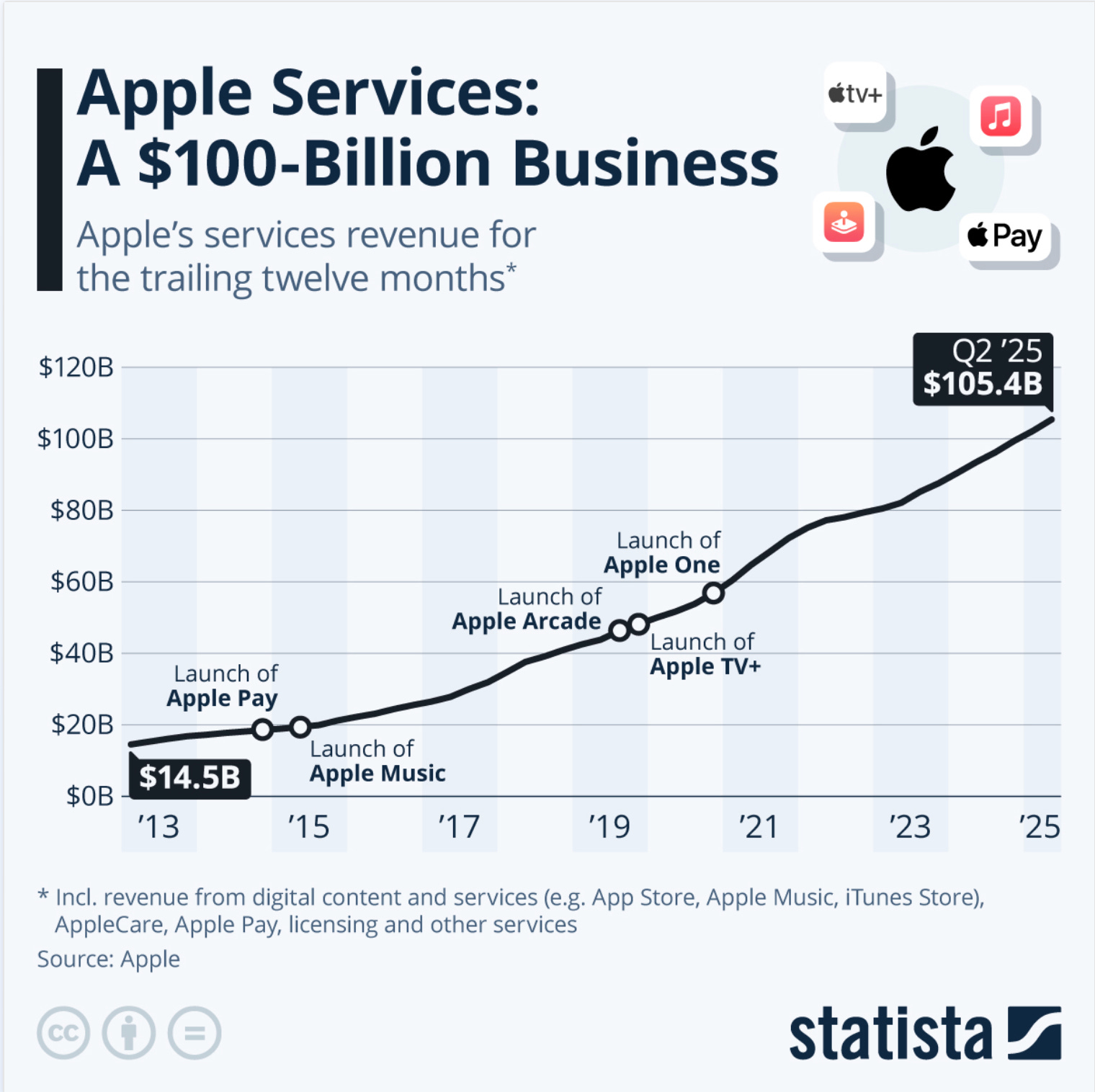
The testament to this strategy is their services revenue, which has just gotten up every year with increasing user base and addition of new services.
Despite its clear benefits, the increasing reliance on services introduces a new set of significant and complex risks. Creating a protected environment for its business leads to the wrath of regulatory bodies across the world. This also comes with intensified scrutiny, and any negative regulatory decision could derail the growth of Apple’s services business.
Be the Top 1% PM - Best PM Interview Mastery Course | PM Cohort & Resources
About Author
Shailesh Sharma! I help PMs and business leaders excel in Product, Strategy, and AI using First Principles Thinking. For more, check out my Live cohort course, PM Interview Mastery Course, Cracking Strategy, and other Resources