

Months ago, I was scrolling Netflix with a friend who’s into action thrillers. I’m more of a drama person.
When Pulp Fiction popped up on their screen, it featured Bruce Willis, looking every bit the action hero.
But on my account? It showcased Uma Thurman
Netflix isn’t just a platform; it’s a storyteller who knows how to grab your attention and keep it.
Behind every click, every scroll, and every “Play” button is a story — your story.
The Secret Sauce Behind Netflix: Personalization
Netflix doesn’t just recommend content — it crafts a personal narrative for each of its 200 million users.
That’s what Netflix does, and they do it through three layers:
Understanding your preferences.
Adapting in real-time.
Presenting content in a way you can’t resist.
Netflix personalizes not just what you watch, but how it presents it to you.
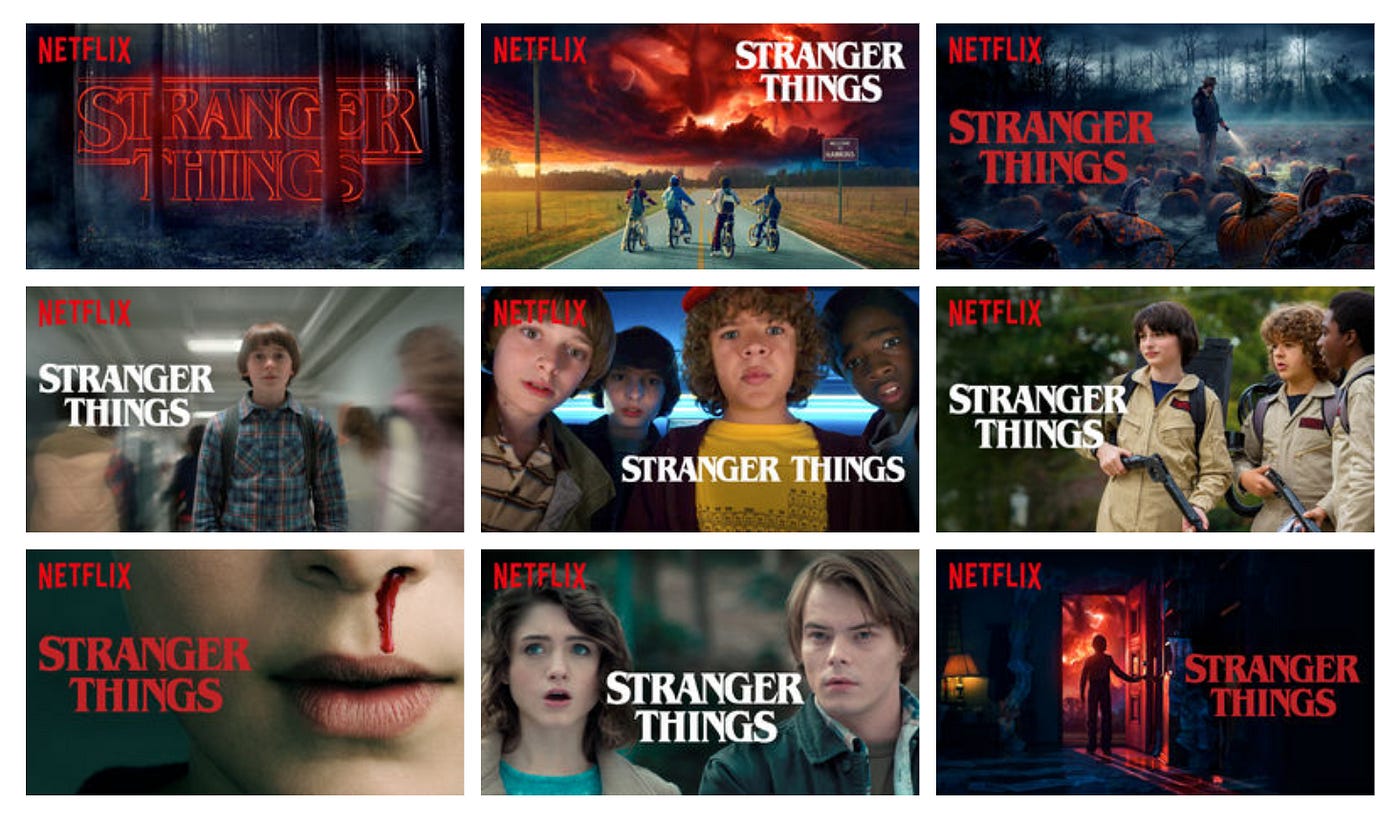
Different Users will see different Thumbnails for the Same movies based on various factors like their preferred Genre and performance of the content etc and then accordingly personalise the experience to the users.
Why Does This Matter?
Imagine if Netflix had only one poster for every movie. Would you have clicked on Stranger Things if it didn’t hint at the mystery, the camaraderie, or the supernatural thrill? The right artwork is a gateway.
It’s not just a pretty picture; it’s a visual argument, saying, “Here’s why this is perfect for you.”
The Science Behind the Magic: Multi-Armed Bandits
What Are Multi-Armed Bandits?
Multi-armed bandits are a type of Machine Learning algorithm designed to balance two competing goals:
Exploration: Trying new things to gather data.
Exploitation: Using what’s already known to get the best result.
Netflix applies this concept to solve a critical challenge: figuring out what combination of factors — like artwork, genres, or timing — will make you click “Play” on a title.
How It Works at Netflix
Let’s break it down with a simple, real-world example:
1. The Problem Netflix Faces
Netflix has many images (artwork) for a single show, such as Stranger Things. Some users might respond better to an image featuring Eleven in a dramatic moment, while others might click on an image of the whole cast together.
But how does Netflix decide which image to show you? This is where multi-armed bandits come in.
2. The Experiment
Netflix starts by showing different users different images for the same title. For example:
User A sees an image of Eleven fighting a monster.
User B sees an image of the kids riding bikes.
User C sees an image of Hopper with a flashlight in the woods.
3. Exploration Phase
Initially, Netflix is “exploring.” It doesn’t know yet which image works best, so it shows a mix of options to many users and collects data:
Which images get clicks?
Which images lead to users watching the entire episode or season?
This is like trying each slot machine at the carnival to see which one pays out the most.
4. Exploitation Phase
Once Netflix gathers enough data, it starts “exploiting” the best-performing images.
If the image of Eleven fighting a monster gets the most engagement, Netflix shows that image to users who have similar preferences.
But it doesn’t stop there — Netflix keeps experimenting with other images for new users to see if something even better emerges.
This is like focusing most of your time on the slot machine that’s been paying out well but occasionally trying another machine to make sure you’re not missing out.
Pay attention to the image next time you see a show or movie on Netflix. It’s likely the result of thousands of experiments the algorithm runs, just to ensure it resonates with you.
For instance:
If you’ve watched a lot of action movies, Netflix might show you an image of Money Heist with characters holding guns.
If you prefer dramas, the same show might be presented with an emotional close-up of the lead character.
To understand such Tech Concepts and Machine Learning Case Studies. Download our Tech for Product Manager having Concepts and Case Studies about Artifical Intelligence