Imagine opening a single app on your phone that seamlessly caters to your every need.
You’re not toggling between multiple platforms to book a ride, order food, send money, or chat with a friend.
Instead, one app does it all.
This is the promise of a Super App — a one-stop digital ecosystem that makes life simpler, faster, and more connected.
But can Uber be a Super App? Let’s dive deep into this question.
What Makes an App a Super App?
There are two things that are important for an app to become a super app. The two things are:
User Engagement
Service Diversification
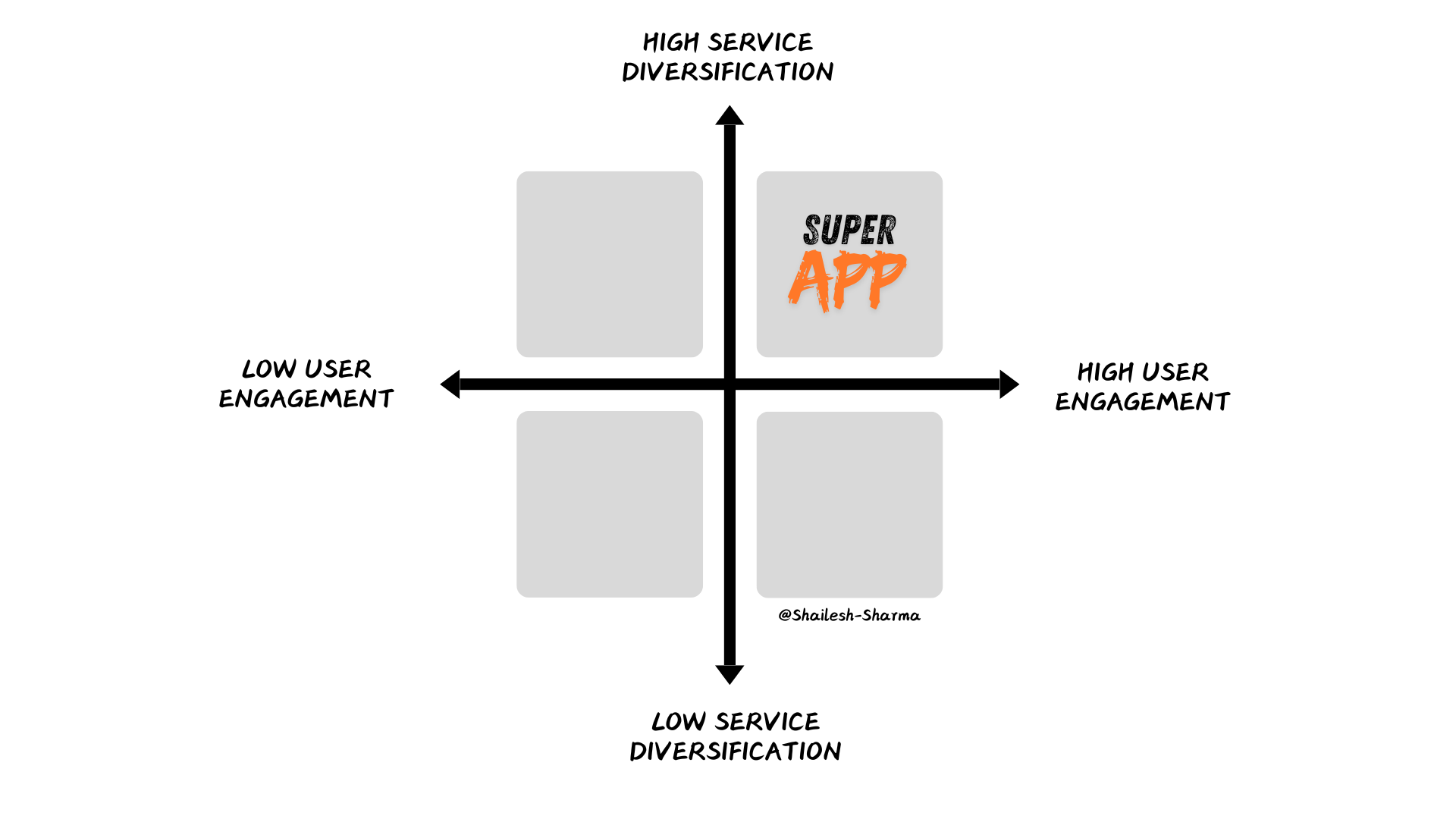
Service Diversification (Low to High): The range of services offered, from single-domain focus to a diverse ecosystem.
User Engagement (Low to High): The frequency and depth of user interaction within the platform.
Where Successful Super Apps Lie?
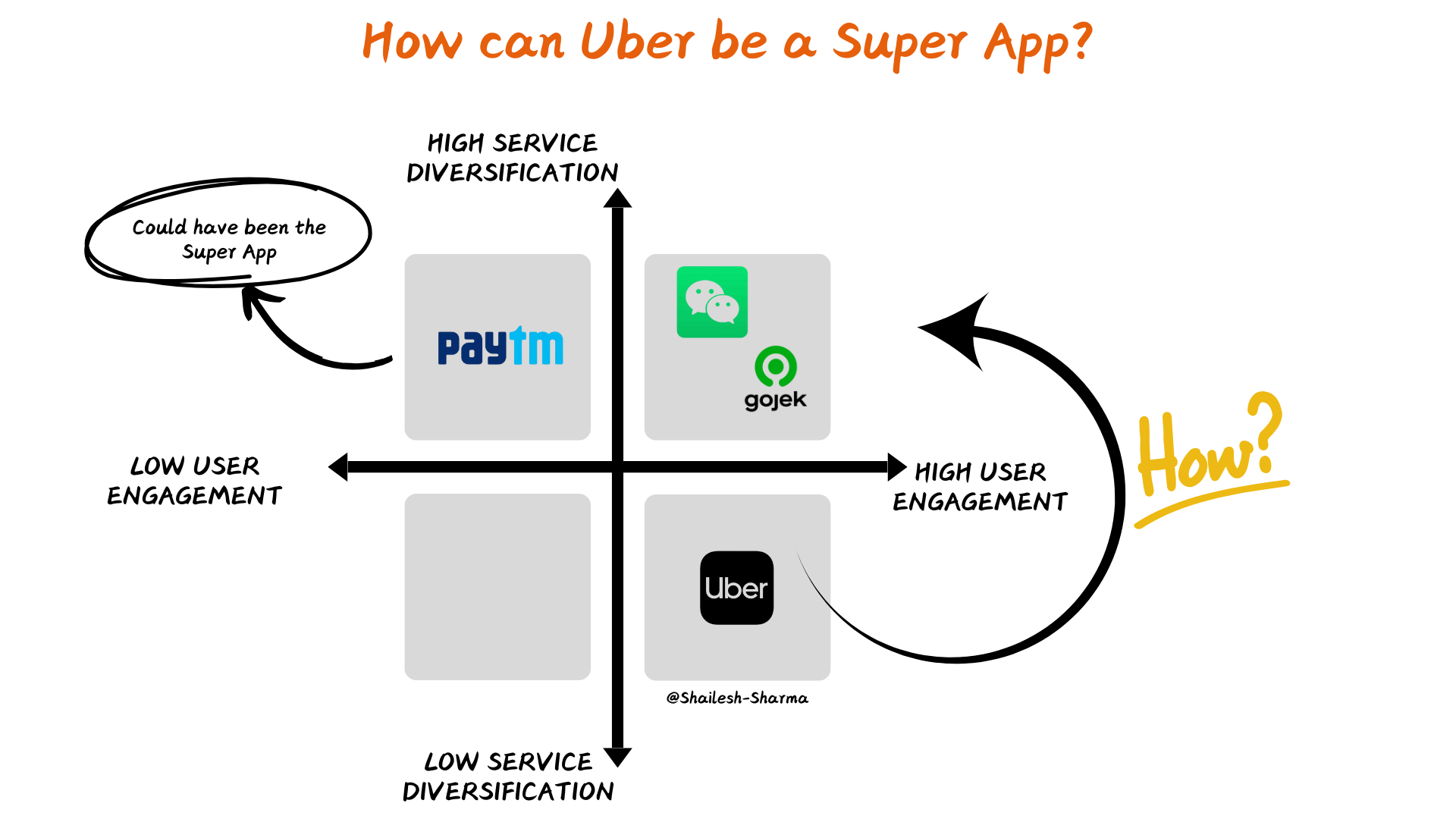
WeChat (Quadrant 1: Super App Leaders)
High service diversification: Messaging, payments, e-commerce, mini-programs, and more.
High user engagement: Daily usage for both personal and business activities.
Gojek (Quadrant 1: Super App Leaders)
High service diversification: Ride-hailing, food delivery, logistics, payments, on-demand services.
High user engagement: Integrated offerings and hyperlocal relevance in Southeast Asia.
Paytm (Quadrant 2: Potential Super Apps)
High service diversification: Payments, banking, e-commerce, and ticketing.
Moderate user engagement: Lags in creating sticky daily-use features compared to WeChat.
What is the Positioning of Uber?
Uber is primarily in Quadrant 3: Focused Giants:
Strengths: Strong in ride-hailing and food delivery (Uber Eats) with robust global operations and logistics capabilities.
Weaknesses: Limited diversification beyond its core domains and moderate user engagement compared to leading Super Apps.
How can Uber Move to Quadrant 1?
To shift from Quadrant 3 to Quadrant 1, Uber needs to focus on service diversification and user engagement simultaneously:
1. Increase Service Diversification
Uber must expand beyond mobility and food delivery:
Financial Services: Build Uber Wallet into a full-fledged financial ecosystem (peer-to-peer payments, microloans, insurance).
E-commerce and Quick Commerce: Use Uber’s logistics network for grocery delivery, retail partnerships, or a marketplace model.
Lifestyle Services: Event ticketing, or subscription models for diverse needs.
2. Deepen User Engagement
Uber must create reasons for users to interact with the app daily:
Personalization: Use AI-driven insights to provide relevant suggestions and offers across services.
Gamification and Loyalty Programs: Reward users for engaging with multiple services, driving ecosystem stickiness.
Community Features: Add messaging or forums to foster connections within the app.
3. Leverage Partnerships
Uber doesn’t need to build every service in-house. It can integrate third-party services to diversify quickly:
Retail Partnerships: Collaborate with retailers for on-demand delivery.
Fintech Collaboration: Partner with banks or digital payment platforms for financial offerings.
Service Integrations: Work with healthcare or education platforms to provide niche, high-value services.
To understand such Tech Concepts and Machine Learning Case Studies. Download our Tech for Product Manager having Concepts and Case Studies about Artifical Intelligence