

In this article, we will learn about the following things
1️⃣ → What is the North Star Metric of Uber
2️⃣ → Decoding North Star Metrics into Different Growth Levers
3️⃣ → Future Looking Strategy for Each Growth Lever
Uber Technologies, Inc. is a leading American multinational transportation company that revolutionized the way people access transportation services through its innovative ride-hailing app.
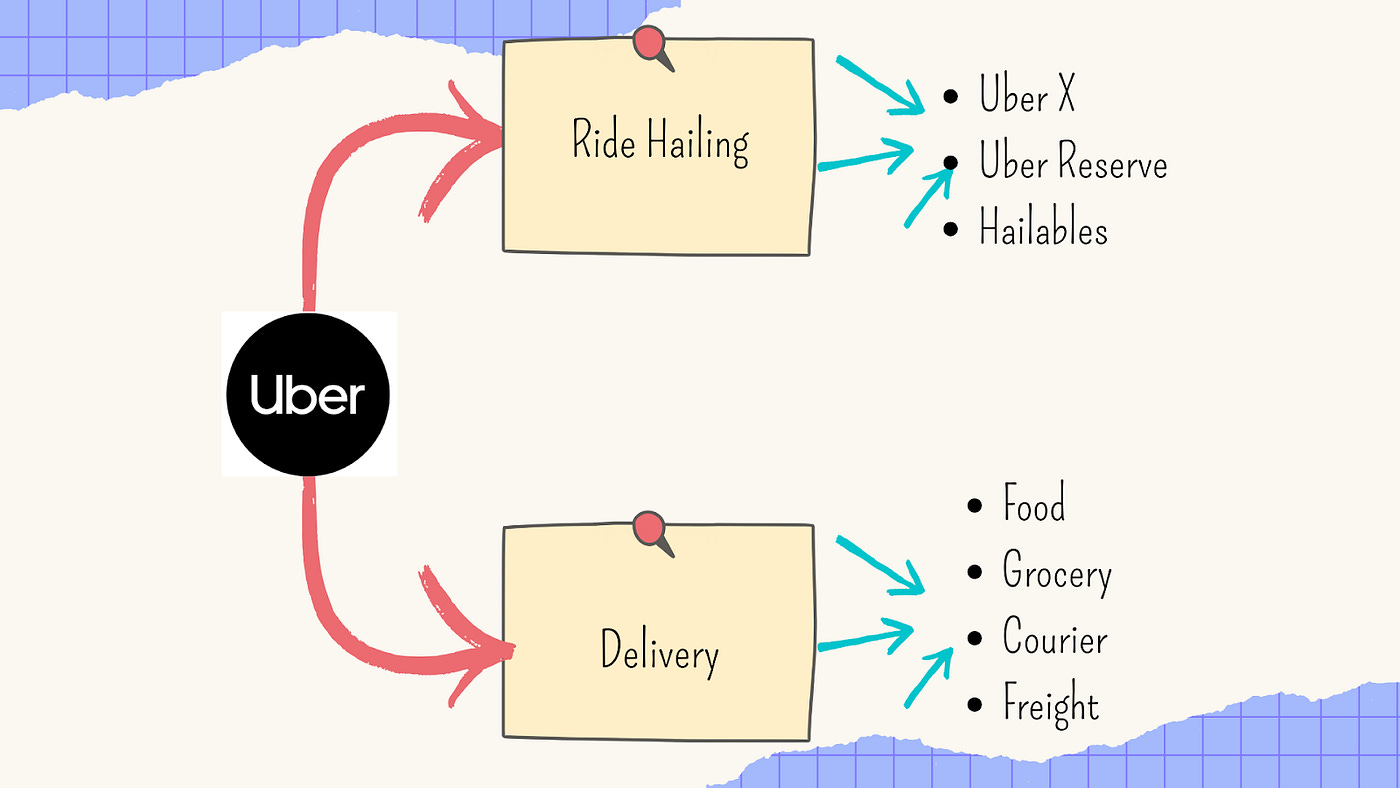
Before delving into Uber’s product roadmap, let’s examine its business landscape. Uber operates within two primary business segments:
Ride business
Delivery Business (Food, grocery, couriers)
What’s Uber Optimising for?
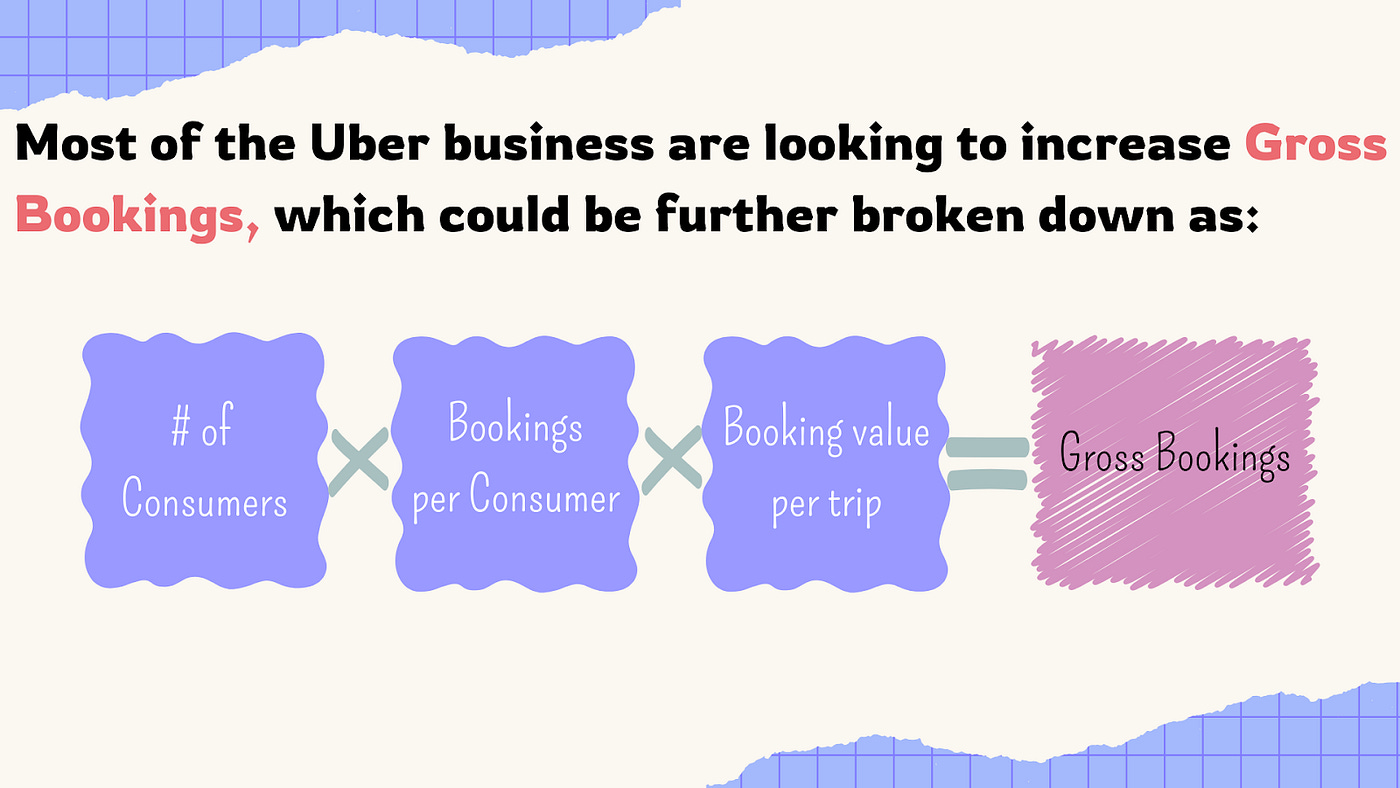
Uber measures the performance of most of its businesses using a single North Star metric which is Gross Bookings.
The nature of the business allows Uber to break this metric into further components, which if optimised can drive the overall gross bookings on the platform.
The following diagram depicts how Uber breaks down the Gross Booking metric into various subcomponents -
Breakdown of North Star Metric
Now that we know how we can break down the gross booking number, which is the north star metric of Uber, let’s spend some time to understand how Uber can finetune different components to achieve a higher Gross Bookings number YoY.
Levers for the Growth of North Star Metric?
Lever 1 — Number of transacting consumers
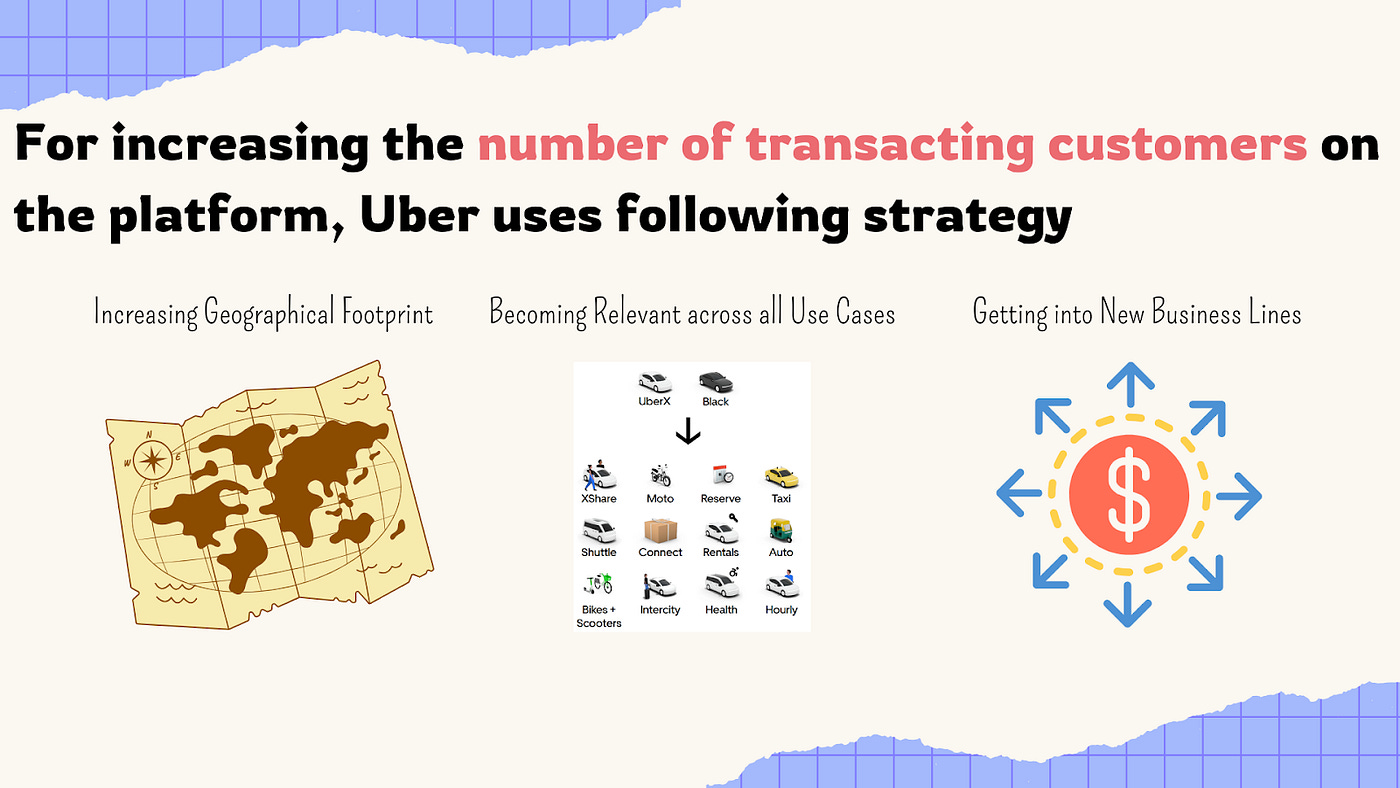
There are several ways Uber is trying to increase the number of active customers, i.e. customers who are transacting on the platform. Let’s discuss these ways in detail -
Increasing the geographical footprint — Uber has successfully built platforms with a global reach.
A logical extension of this success would be to replicate their model across various geographies.
While the company initially pursued rapid global expansion, under Dara Khosrowshahi’s leadership, Uber appears to be prioritizing investment in markets where it can maintain a dominant position.Becoming relevant across all user journeys — Uber demonstrates a strategic focus on catering to diverse user needs and preferences within its core business.
This is evident in its expansion beyond the initial offerings of UberX and Black, diversifying into a range of mobility solutions.
This approach allows Uber to capture a wider customer base with varying purchasing power and preferences, solidifying its position as a dominant player in the transportation market.
For markets like India, where the income per capita is lower, Uber has not hesitated in launching affordable ride options such as motorbikes & auto rickshaw.Getting into new business lines — Over the past few years, Uber has expanded into multiple new business lines, such as Food and Grocery delivery.
These new ventures have also become valuable channels for cross-selling by strategically prompting users with relevant product offerings. It’s unsurprising that delivery and mobility services have driven a higher than 20% increase in customer acquisition for each other.
Lever 2 — Bookings per Consumer
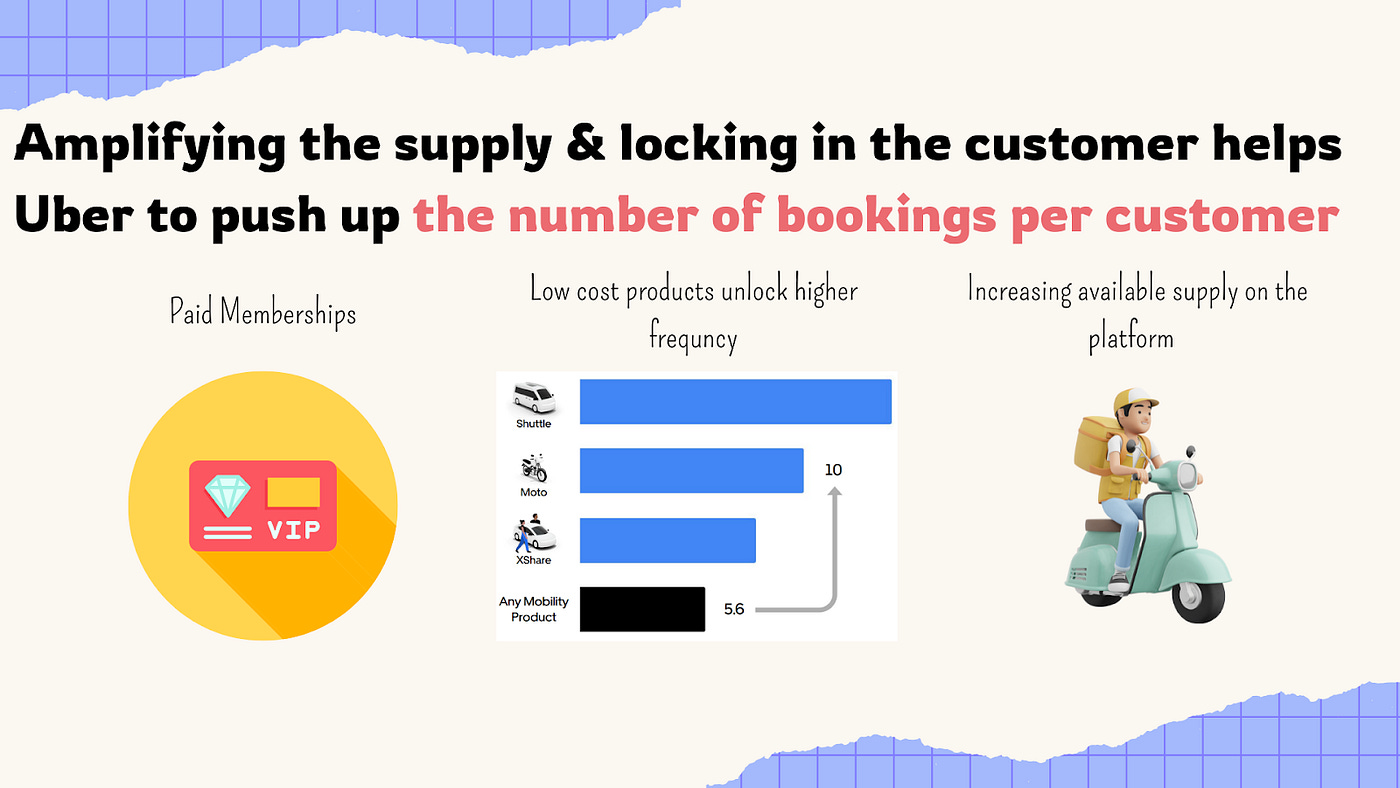
Paid Membership — Increasing the number of transacting customers is not only about acquiring new customers but also about retaining the already acquired customers or locking in the acquired customers in the Uber ecosystem and increasing the number of bookings made per customer. In order to do the same Uber deploys two types of programs -
a) Full- blown membership — Uber One is one such membership, wherein after purchasing this membership, customers receive benefits such as free delivery for food and grocery services and cashback on Uber rides. These memberships are typically offered by Uber in regions where they provide multiple services.
b) Stripped down membership — In countries where Uber doesn’t offer a full suite of services, they provide a more limited membership known as Ride Pass. This pass offers benefits such as no surge pricing on a fixed number of rides, encouraging consumers to choose Uber as their preferred ride-hailing platform.
2. Low Cost Products — Reducing barriers to transactions is crucial for increasing their volume. While discounting can lower product prices, it negatively impacts platform profitability. To effectively overcome this barrier, Uber has launched a set of affordable products like Uber Auto(3 Wheeler) & Moto(2 Wheeler) in India. These products not only entice more customers to try Uber but also encourage them to use the platform more consistently.
3. Increasing Supply of Drivers — Uber’s success hinges on a delicate balance between attracting customers and ensuring a robust supply of service providers.
While customer acquisition and retention are crucial, a sufficient pool of readily available drivers, delivery partners, or other service providers is equally vital for the platform to function effectively.
A better way to understand this aspect of their business is by breaking down the
supply as # of Service Providers multiplied by Supply Hours per Service Provider.
For any product intervention on the platform, hence look at -
→ Ensuring that the onboarding of service providers aka delivery partners, restaurant partners is seamless & easy — e.g. an easy onboarding workflow for all service providers
→ Devising the right incentive program to ensure the high availability of these partners on the platform — e.g. a rewards program to encourage the drivers to increase their availability hours on the platform
→ Predicting the churn of the service providers and making proactive efforts to prevent the churn — e.g. Creating different cohorts of in-active service providers and finding different ways to engage with them
→ In addition to the same, Uber is also investing heavily in developing self-driving cars. Imagine the amount of supply-unlock Uber can have if it succeeds. Every new car on the road requires a driver manning the car and the drivers are also present in a limited amount
If you Enjoy Reading till now, Downlaod the Case Studies for different Strategic Insights
Lever 3 — Increasing Booking Value per Trip
To increase the booking value per trip, Uber maintains a diverse portfolio of products across various price points, enabling balanced growth in average fares.
To drive the adoption of these different product offerings, Uber occasionally provides incentives to customers through promotions, encouraging them to explore alternative options.
Offering trials to the new categories leads to the acquisition of category acquisition and retention.
Having said that this lever is not very easy to optimise as pushing the users up and up in the value can diminish the bookings done per customer.
What’s your thoughts on Key Strategic Bet of Uber?
Resources to Download
Strategy for Product Managers, Leaders, Everyone ( Download Here ) [Free Preview Available]
Tech / AI for Product Managers, Leaders, Everyone ( Download Here )
About the Author
Be sure to clap and follow the writer ️👏️️
Follow us: LinkedIn | YouTube | Newsletter | Resources