


One company that has been in the news these days (for both good and bad reasons) is Intel. On the one hand, its competitor, Nvidia, has outpaced it. On the other hand, there has been pressure from the U.S. president, which ultimately led to a stake buyout by the U.S. government. In this article, we will explore the journey of Intel and learn about the following aspects -
How did Intel create a lock-in in the microprocessor ecosystem, thereby creating a virtual monopoly
Intel's “Integrated Device Manufacturer” strategy
Mega technological trends that Intel missed
How disruptions in the semiconductor supply chain caught Intel off guard
Intel’s current state and its future options
If you really want to understand Strategy in depth and Crack Strategy Interview Questions, you need to check out this book. 5/5 Rated, and it is helping so many people get job Offers.
Intel began in the memory business but eventually shifted its focus to microprocessors. When IBM launched its first PC, it made the pivotal decision to outsource two key components: the processor and the operating system. This opened the door for Intel to supply processors for IBM PCs and for Microsoft to dominate the PC operating system market. From that point onward, there was no looking back for Intel, as the company experienced remarkable growth.
Intel capitalized on this opportunity by creating a virtual lock-in, ensuring that it faced no real challengers for a long time. To understand how this lock-in was established, we need to look at the interactions among applications, operating systems, and processors within the PC ecosystem.
Application collects the user request, converts it into instructions & passes on to the OS
OS, allocates the right hardware, processor & memory to execute the user’s request
Processor receives the instructions from the software, executes them and return the response to user
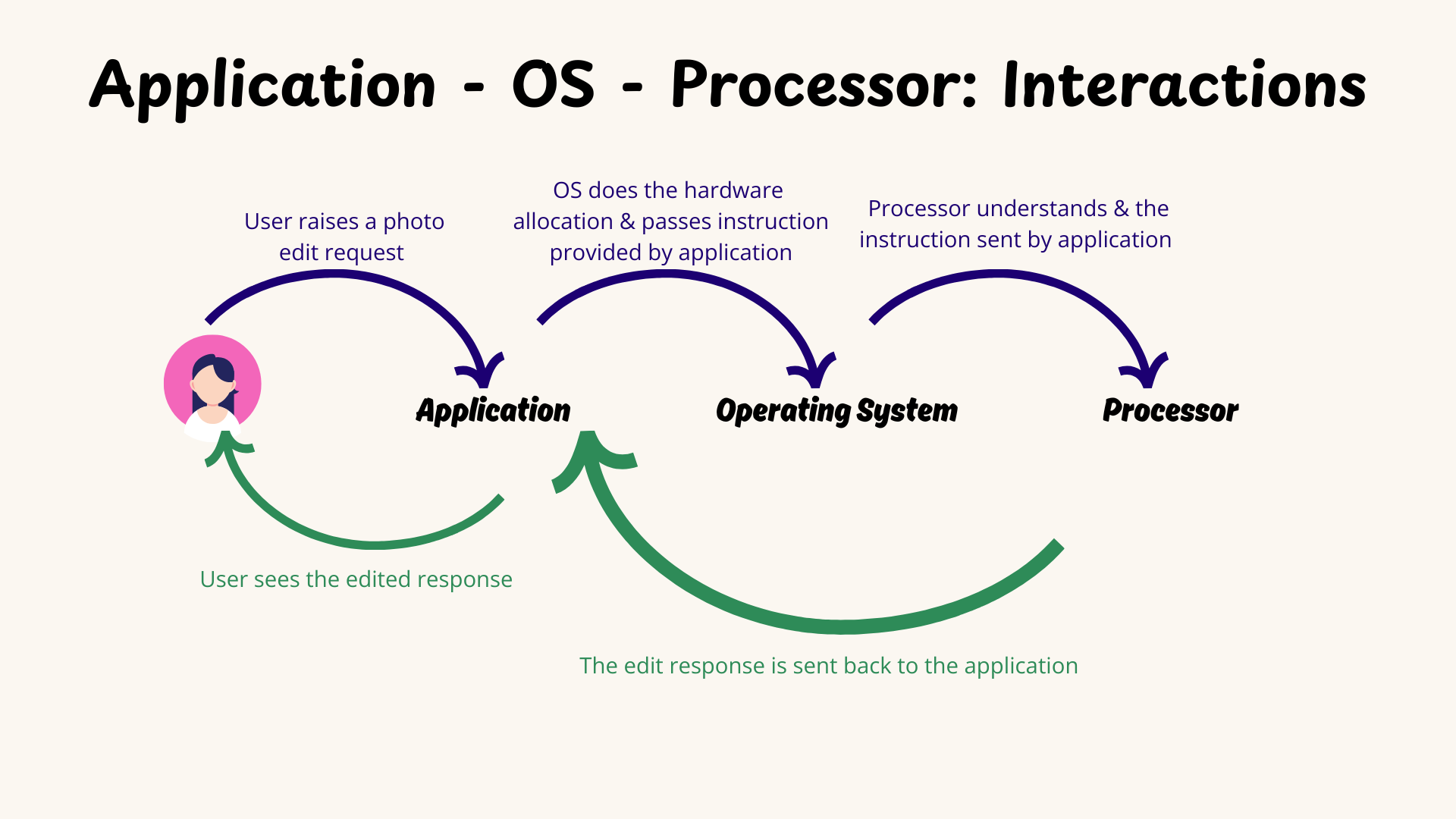
The lock-in was created on the back on the “instruction set”. Think of an Instruction Set as the vocabulary a processor understands. Every action a piece of software wants the computer to perform—from adding two numbers to drawing a pixel on the screen—must be translated into a series of commands from this specific vocabulary. These commands are called "opcodes".
When a program is compiled, it is converted from human-readable code into a binary executable file, which is essentially a long sequence of these opcodes that the processor can execute directly.
Intel's masterstroke was ensuring that as it released new, more powerful processors, each new chip understood the entire vocabulary of its predecessors.
This backwards compatibility ensures that for every new processor launched by Intel doesn’t require the application software to be rewritten. In addition to this backwards compatibility, a solid partnership with Microsoft ensured that there were no near rivals for Intel in the PC ecosystem.
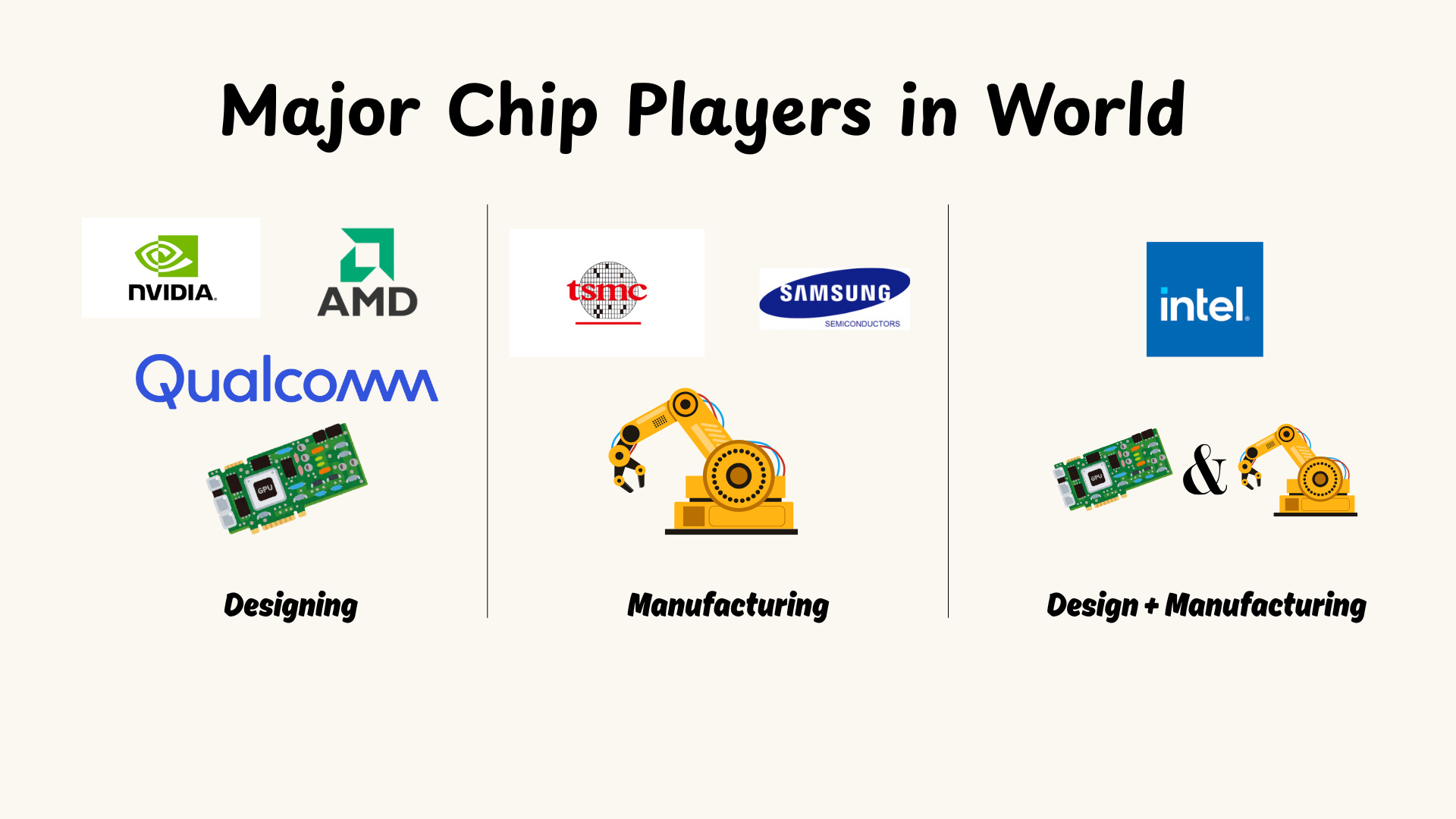
Intel followed a vertically integrated approach for devising the new set of processors. They took the path of not only designing the chips in-house, but also relied on manufacturing them in-house. This helped Intel in -
Unmatched Integration - Design teams could create architectures optimised to take full advantage of the next manufacturing process and vice versa
Control and Scale - Owning its own fabs gave Intel complete control over its production roadmap. During the explosive growth of the PC market, this was a critical advantage, ensuring a reliable supply of its most profitable products
Intel has certainly made the most of the PC peacetime, but it has overlooked major trend changes, which have led to a precarious situation. Some of the major misses of Intel are as follows -
Passing on the mobile revolution - Intel was approached by Apple to design the processor for their secretive project, iPhone. Intel passed on that idea, assuming that Apple will not be able to sell so many iPhones to make it a lucrative opportunity. By ceding the mobile market to more power-efficient, Intel missed the single largest technology market of the 21st century.
The Rise of GPUs and AI: While Intel focused on CPUs, NVIDIA capitalised on the growing importance of Graphics Processing Units (GPUs) for gaming and, more significantly, for parallel processing in artificial intelligence and machine learning. Intel was late to develop competitive discrete GPUs and is now playing catch-up in the lucrative AI accelerator market.
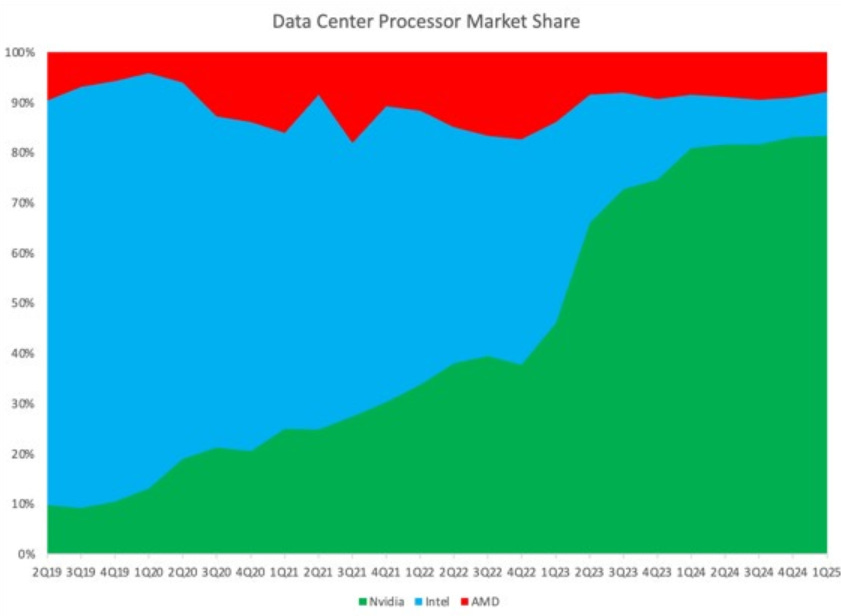
Source: Seaport and Company Data, D2D SubStack
Couldn’t embrace novel semiconductor supply chain: In the late 1990s, pure play foundries started emerging. These foundries were purely in the business of manufacturing while leaving the process of designing to chip players such as Nvidia & AMD. Semiconductor manufacturing & designing are both capital-intensive processes. Players like Nvidia chose to invest their capital in the design process while leaving the manufacturing to TSMC. Intel decided to fight the war at both fronts. Apart from exhausting capital, the lack of major innovations in the manufacturing process also impacted their product innovation in a negative manner
Because of the above reasons, Intel is now at cross-roads. In order to revive itself, Intel has drafted the following strategy:
Double down investments on manufacturing: Yes, it might look like a bad choice obviously considering how the leading players are partnering with foundries, but doubling down on investment is a rational decision for Intel.
Chip manufacturing is a very hard process. With the right technological prowess, Intel would like to one of the few players in the world who can manufacture chips
Secondly, TSMC obviously is in a precarious position because of its geography and ongoing conflicts with China. In a hypothetical scenario if China attacks Taiwan and gains control of TSMC, it will be the biggest US loss. The US government will do anything in their power to create a robust semiconductor manufacturing ecosystem in the country. Be it allowing TSMC to open a manufacturing facility in Arizona or infusing capital in Intel to support its manufacturing plans
Opening Intel Foundry Services (IFS) to the world: Intel is opening its factory doors to the world i.e. manufacturing chips for external customers, including direct competitors and fabless companies like Qualcomm and Microsoft. This strategy, however, has a very weak weakness. Fabless companies are not wary of using TSMC because TSMC doesn’t design or sell chips to the end customers. However, with Intel it isn’t the case, hence risk of losing the IP will make fabless hesitant to work with IFS
Pragmatic Use of External Foundries: Intel will strategically use third-party foundries like TSMC to manufacture certain products or modular "chiplets." This pragmatism decouples its product roadmap from the success of its internal fabs, ensuring that Intel can always bring the best possible product to market, regardless of where the silicon is made.
On paper, it is the right strategy. It correctly diagnoses the failures of the past—the brittleness of a monolithic IDM and the folly of ignoring external innovation—and proposes a hybrid model that leverages Intel's unique potential as a large-scale, Western-based manufacturer. It is a bet not just on technology but on a new business model, a new culture, and a new geopolitical reality where supply chain resilience is paramount.
For More Such Detailed Case Studies

Be the Top 1% PM | YouTube | PM Cohort & Resources | Crack PM Interview | AI/Tech for Everyone
About Author
Shailesh Sharma! I help PMs and business leaders excel in Product, Strategy, and AI using First Principles Thinking. For more, check out my Live cohort course, PM Interview Mastery Course, Cracking Strategy, and other Resources