


In this article, we will learn -
Why was Meta Pay launched? Where does it fit in the Meta ecosystem?
Can Meta Pay become a dominant payment player in the world?
Let’s start..
Meta’s Revenue Landscape
Why is Meta interested in launching a payments app? To answer this question, we must first examine Meta's various revenue streams and their contributions to its overall revenue. The table below shows the total revenue earned by Meta in 2024.
As the data indicates, Meta generates approximately 98% of its revenue from its advertising business, which is akin to putting too many eggs in one basket.
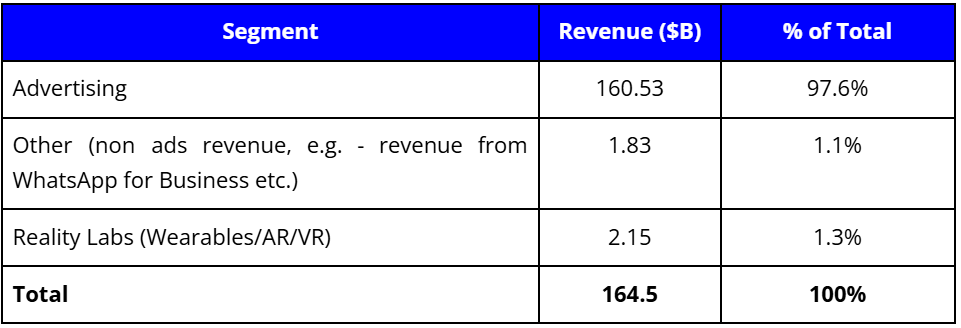
One might argue that in the internet economy, advertising revenue is a primary source of earnings for many tech giants—and this is not incorrect. However, to understand the extent to which Meta’s revenue is skewed toward advertising, consider Google, where ad revenue accounts for approximately 76% of its annual revenue.
To diversify its revenue streams, Meta is exploring Meta Pay as a strategic initiative.
But, why is payment a good diversification strategy?
Because, Meta has two important factors playing in its favor - a huge user base & the Meta ecosystem.
A huge user base is something which is very obvious, hence let’s try to understand more about how Meta’s ecosystem is beneficial for Meta Pay.
Meta’s Ecosystem and the Shopping Funnel
Meta’s ecosystem, which includes social media platforms such as Facebook, WhatsApp, and Instagram, attracts a vast user base and has transformed the online shopping funnel. The seamless integration of diverse content types enables effortless discovery of products and services on Meta’s apps.
The true competitive advantage lies in controlling the entire shopping funnel, from discovery to transaction, rather than just facilitating product discovery. While Meta is unlikely to become a direct seller of goods and services, it can create a highly effective marketplace by seamlessly connecting buyers and sellers.
Meta has already made progress toward building a marketplace but is still far from creating a full-stack platform. Beyond enabling discovery, Meta must address two critical components of the shopping funnel: (a) developing an effective shopping interface and (b) enabling seamless transactions within its apps.
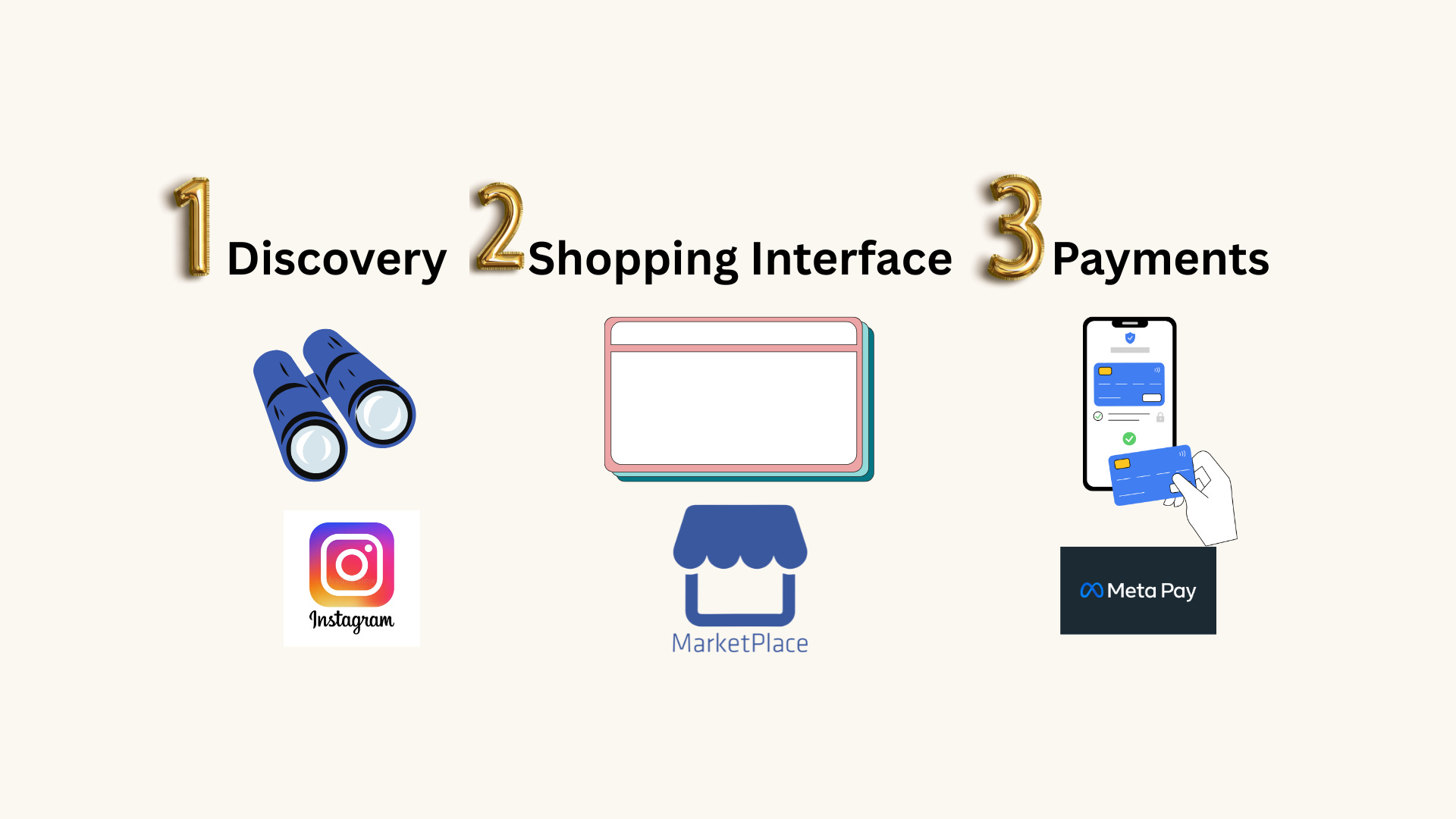
Meta Pay is a significant step toward enabling seamless transactions within Meta’s apps. Furthermore, Meta Pay will not only strengthen Meta’s control over its marketplace ecosystem but also serves as a strategic follow-up investment should the Metaverse initiative succeed.
Meta Pay and the Metaverse Opportunity
The Metaverse is a virtual reality space where Meta anticipates users will spend significant time. However, developing the Metaverse requires substantial investment, and Meta aims to recover these costs through two primary avenues: (a) displaying advertisements within the Metaverse, an obvious choice given its advertising expertise, and (b) facilitating the trade of virtual objects in the Metaverse. Trading virtual objects will necessitate a robust payment mechanism, and Meta Pay is well-positioned to capitalize on this opportunity.
Competing in the Open Payments Ecosystem
While the above applications operate within a relatively closed ecosystem where Meta can create artificial entry barriers, the real opportunity lies in Meta emerging as a leading payment player in the open ecosystem, facilitating peer-to-peer and peer-to-merchant transactions. Although Meta’s vast user base provides a strong distribution network, transforming this advantage into a thriving payments business will be challenging.
Meta’s success in the open payments ecosystem will largely depend on the regulatory framework and require an accelerated push through one of the following strategies:
Offering strong incentives for users and merchants to adopt Meta Pay, as without compelling benefits, it risks being just another payment mechanism, similar to credit card reward points.
Capitalizing on an innovation wave, where Meta can establish itself as a leader, such as Google Pay leveraging the UPI wave in India.
Conclusion: The Potential of Meta Pay
In summary, while Meta Pay could be a dark horse in Meta’s diversification strategy, its success depends on the future value of Meta’s closed ecosystem and the extent to which it can penetrate the open payments ecosystem.
If you really want to understand Strategy in depth and Crack Strategy Interview Questions, you need to check out this book. 5/5 Rated, and it is helping so many people get job Offers.
Be the Top 1% PM | YouTube | PM Cohort & Resources | Crack PM Interview | AI/Tech for Everyone
About Author
Shailesh Sharma! I help PMs and business leaders excel in Product, Strategy, and AI using First Principles Thinking. For more, check out my Live cohort course, PM Interview Mastery Course, Cracking Strategy, and other Resources