


Before moving to this article, you can find our other very Important articles
AI Product Metrics ( AI PM Interview Question )
In this article, we will understand key terms of Generative AI with the help of an example.
In the entire article, we will be explaining the concept with the help of the E-commerce Gen AI Assistant, which will help people with the discovery of brands and products on the platform.
Let’s start -
1. Large Language Models
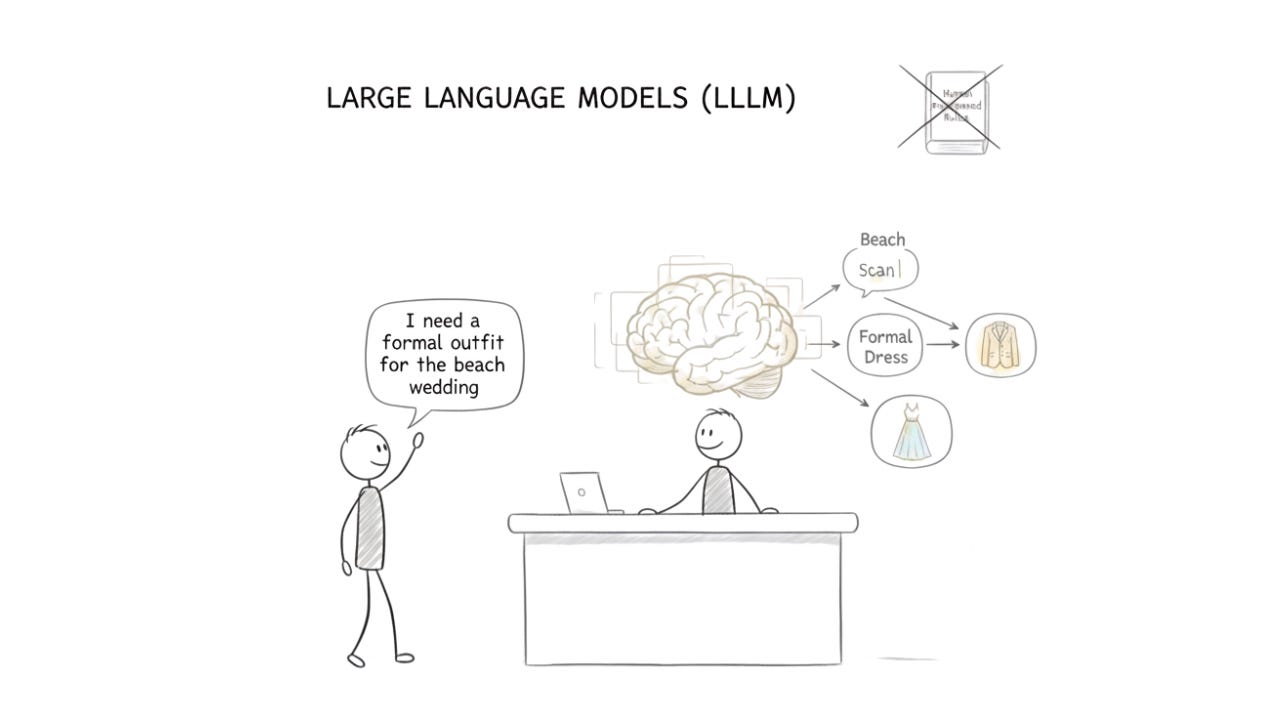
The first term is Large Language Model ( LLM), so a large language model is a sophisticated statistical system trained on massive amounts of text to predict the next word or part of a word in a sequence.
It learns the patterns of human language, including grammar facts and reasoning abilities, which allows it to process and generate human-like text.
Let’s understand with the help of our e-commerce example. A large language model acts as the brain of the chatbot.
When a user types I need a formal outfit for a beach wedding the model understands the intent and the specific context of both formal and beach without needing a human to program every possible combination of those words.
2. Tokenisation
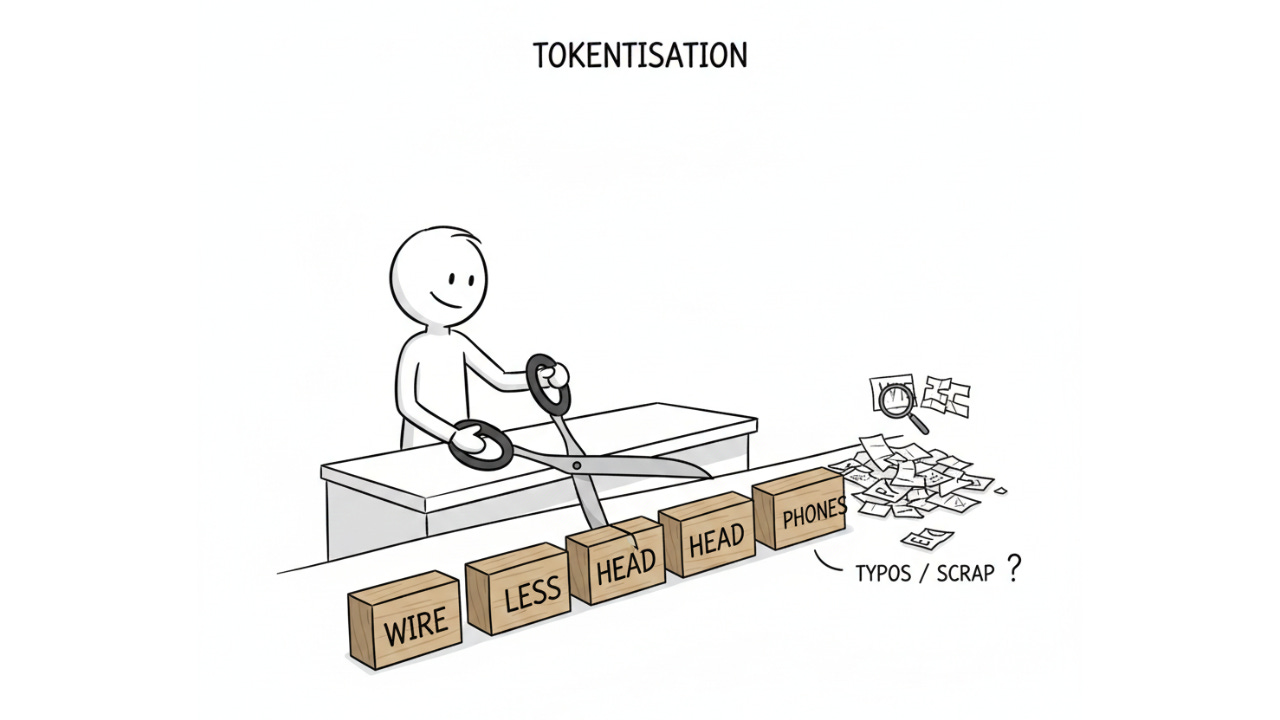
Tokenisation is the process of breaking down a sentence into smaller units called tokens, which can be whole words, characters or parts of words.
This is necessary because models do not see text as humans do but rather as a sequence of these smaller units.
If a user searches for wireless headphones the system might break this into tokens like wire less and head phones. This allows the model to understand the relationship between wireless and other words containing wire or less helping it provide more accurate results even if the user makes a typo.
3. Vectors
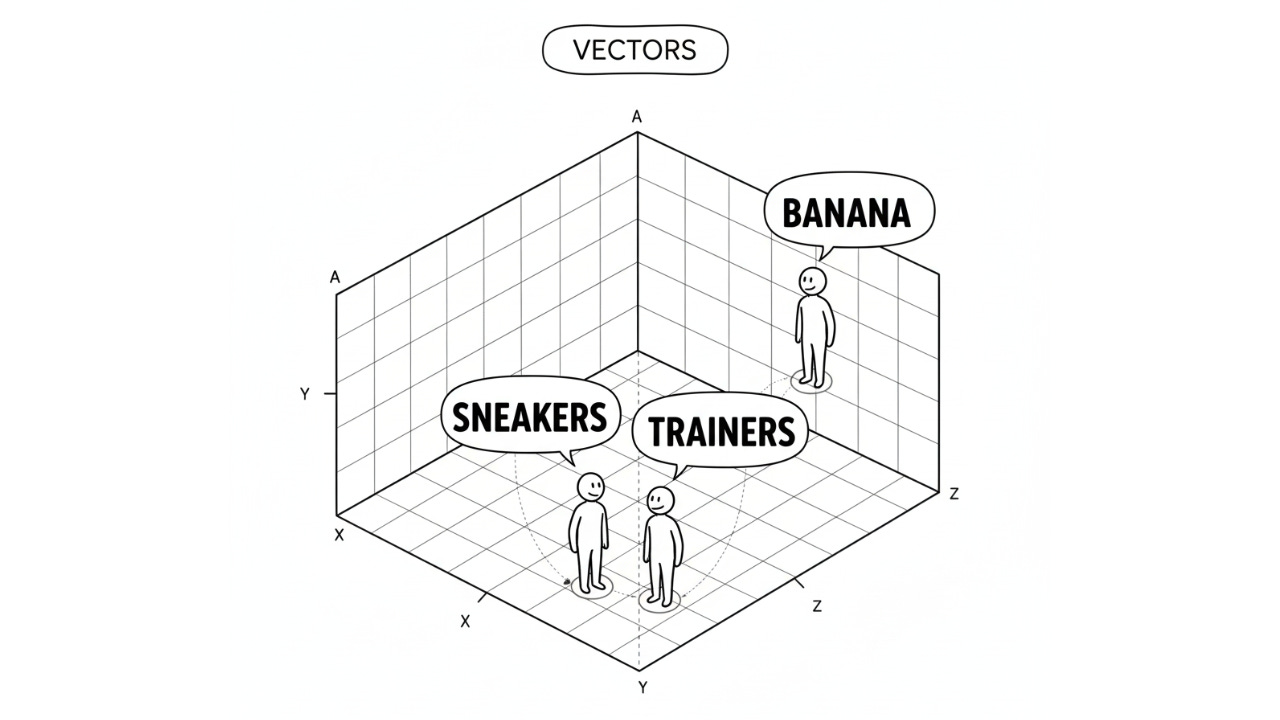
Vectors are mathematical representations of words or tokens in a multi dimensional space.
Each word is assigned a series of numbers that define its meaning. Words that are contextually or semantically similar are placed closer together in this mathematical space.
In our clothing store the word sneakers and the word trainers will have vectors that are very close to each other.
Even if the product description only uses the word sneakers a user searching for trainers will find the right product because the system understands the mathematical similarity between the two concepts.
4. Attention Mechanism
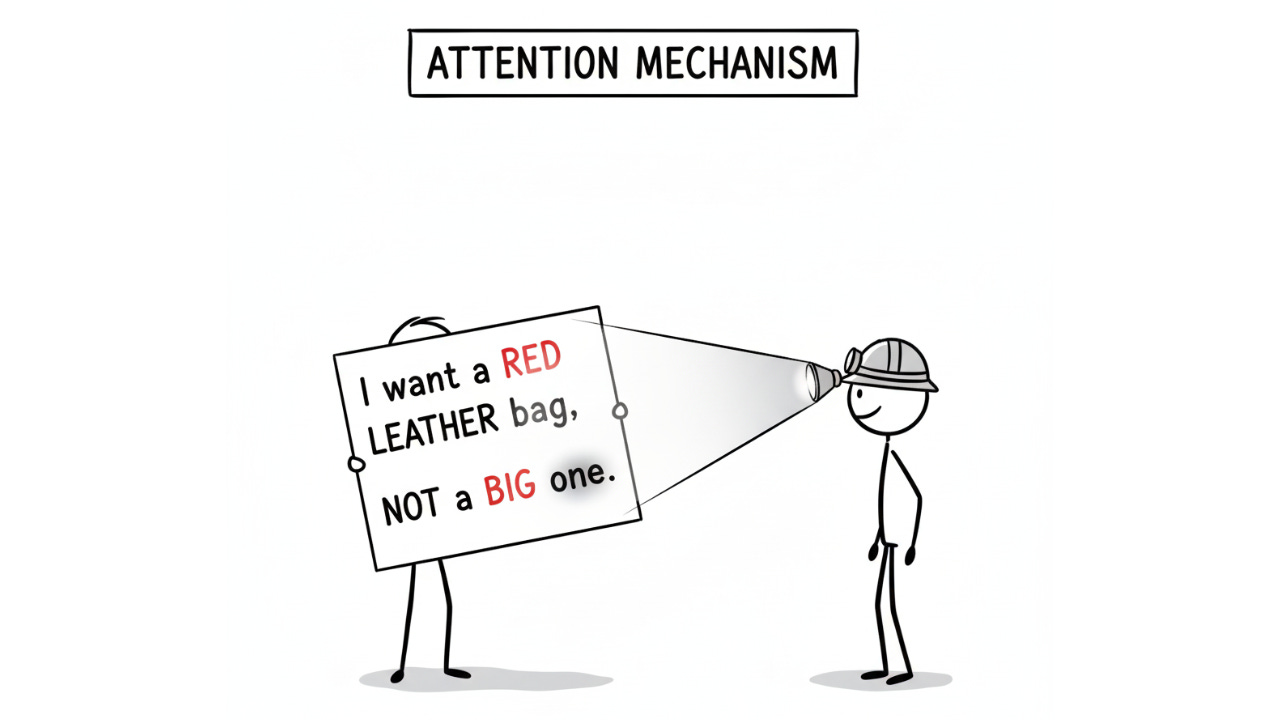
The attention mechanism is a technique that allows a model to focus on the most relevant parts of an input sentence to understand its meaning.
It assigns different weights to different words depending on how much they contribute to the context of the overall message.
When a user says I want a red leather bag but not a big one the attention mechanism helps the model focus on red and leather for the style but gives high importance to not and big to ensure it does not suggest large items.
It understands which adjectives modify which nouns.
5. Self-Supervised Learning
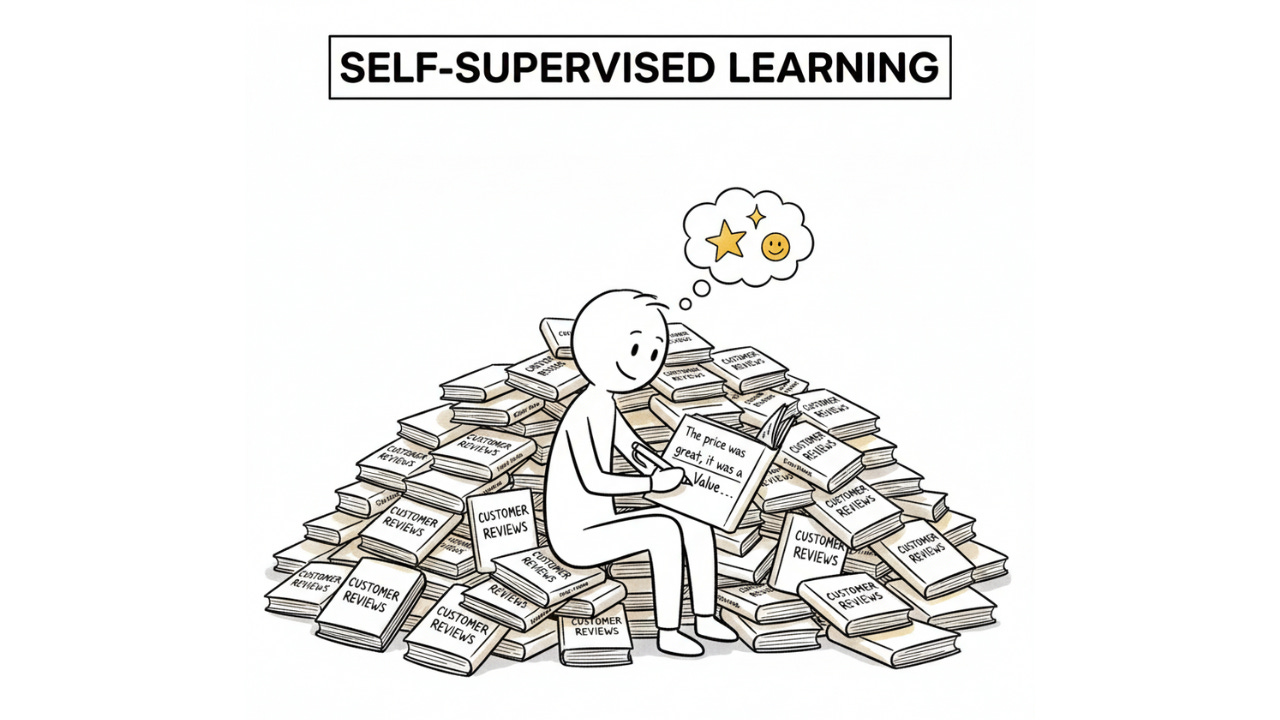
Self-supervised learning is a training method where a model learns from unlabeled data by creating its own tasks.
For instance, it might hide a word in a sentence and try to guess what it is. This allows the model to learn from the entire internet without needing humans to manually tag every piece of information.
The reason our chatbot understands customer reviews so well is that it has already analysed millions of public reviews during its training.
It learned on its own that terms like value for money and affordable are usually positive indicators in a shopping context.
6. Transformer
A transformer is a specific neural network architecture that changed AI by allowing models to process all parts of a sequence at once rather than one word at a time.
This allows the model to maintain long-term memory of the beginning of a sentence even when it reaches the end.
If a user provides a long list of requirements for a laptop including battery life screen size and processor speed, the transformer architecture allows the assistant to keep all those constraints in mind simultaneously to find the perfect match, instead of forgetting the first requirement by the time it reads the last one.
7. Fine Tuning
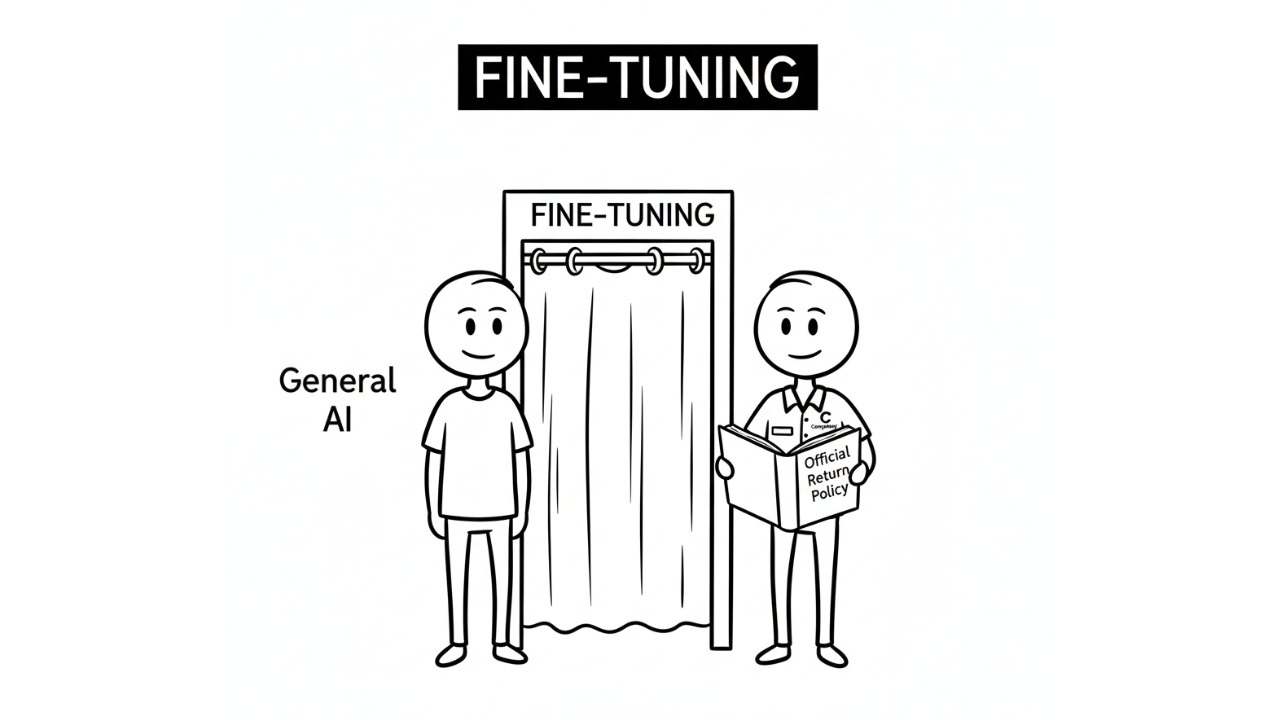
Fine-tuning is the process of taking a pre-trained general model and training it further on a smaller, specific dataset. This helps the model become an expert in a particular domain or adopt a specific brand voice.
For example, we take a general model and fine-tune it using our company’s past customer support tickets and product manuals.
This ensures that the chatbot speaks in our brand’s professional tone and knows the specific details of our return policy, which a general model would not know.
8. Few-Shot Prompting
Few-shot prompting involves providing a small number of examples within the prompt to show the model how it should perform a task. It is a way to guide the output format or style without changing the underlying model.
To ensure the chatbot always summarises product reviews in exactly three bullet points, we provide three examples of reviews and their corresponding three-point summaries in the instructions. The model then follows this pattern for every new review it analyses.
9. Retrieval Augmented Generation
Retrieval Augmented Generation or RAG is a framework that allows an AI to look up external data from a reliable source before generating an answer.
This prevents the model from making things up and ensures the information is current.
When a customer asks is this phone in stock the model does not guess. It uses RAG to check the live warehouse database and then uses that specific data to tell the customer yes we have four units left in the Mumbai warehouse.
10. Vector Database
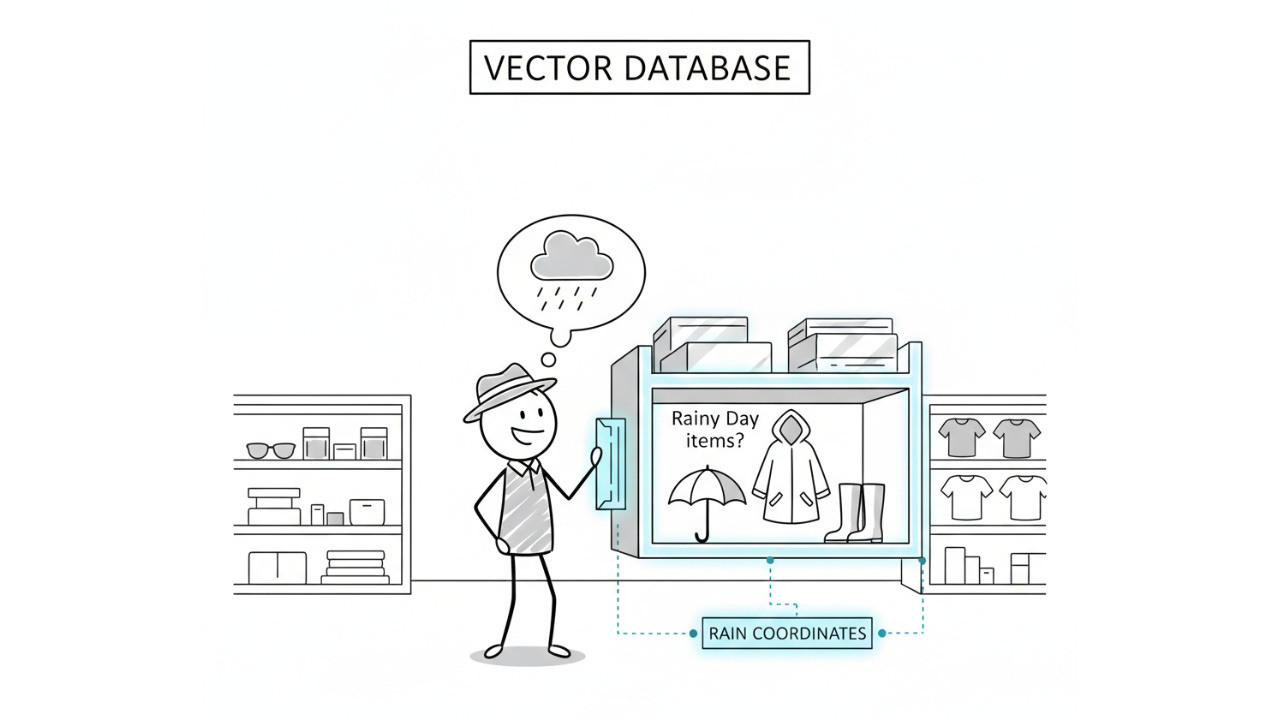
A vector database is a specialised storage system that holds information in the form of vectors. It allows for semantic search where the system finds information based on the meaning of the query rather than just matching keywords.
For example, we store our entire product catalogue in a vector database. If a user asks for something for a rainy day, the database finds items like umbrellas and raincoats because their vectors are mathematically related to rain, even if the word rain is not in every product title.
11. Model Context Protocol
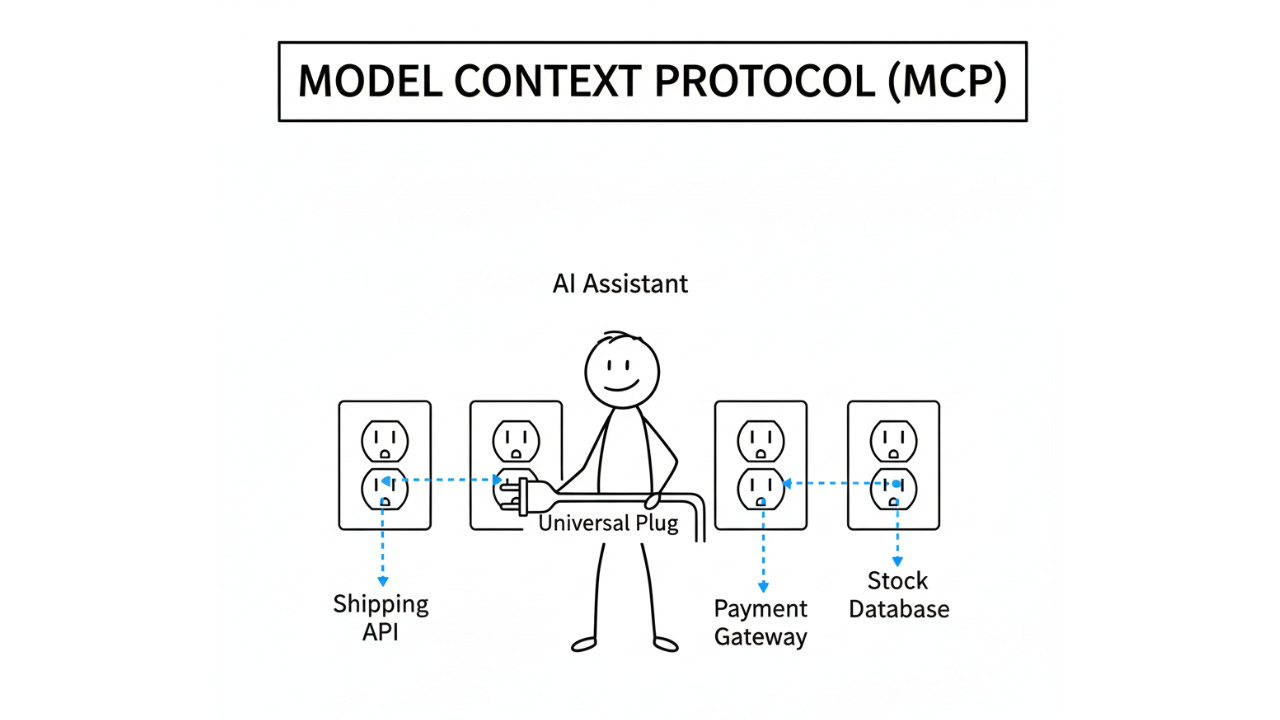
Model Context Protocol is a standardised way for AI models to connect with external tools and data sources.
It provides a consistent bridge so that the AI can interact with different software systems without needing custom code for every single integration.
We use this protocol to link our AI assistant to our shipping partner’s API. This allows the bot to securely fetch real-time tracking updates and present them to the user without us having to build a unique connection for every courier company we use.
12. Context Engineering
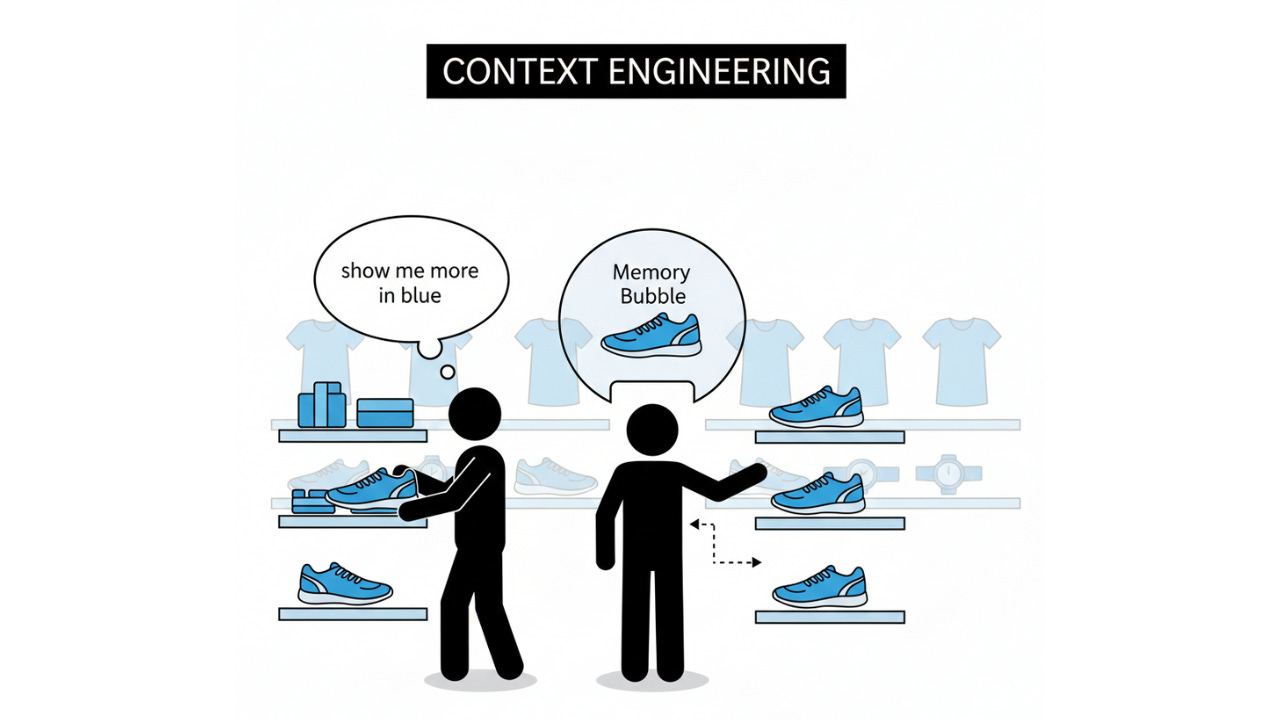
Context engineering is the practice of managing the information that is fed into the model during a conversation. This includes keeping track of the chat history and personalising the input to ensure the model has all the necessary background to stay relevant.
If a user has been looking at running shoes for ten minutes and then says show me more in blue context engineering ensures the system knows more refers to running shoes and not blue shirts or blue watches, which might also be in the store.
13. Agents
An agent is an AI system designed to use tools and take actions to achieve a specific objective. Unlike a chatbot that only talks, an agent can plan a series of steps and execute them in the real world or within a software environment.
An e-commerce agent can handle a full exchange process.
If a customer wants to swap a medium shirt for a large one the agent checks the stock reserves the new item creates a return shipping label and sends the confirmation email all in one go.
14. Reinforcement Learning with Human Feedback
Reinforcement Learning with Human Feedback is a process where humans rank different responses from the AI to teach it which ones are better.
This helps align the model’s behaviour with human preferences for helpfulness and safety.
During the testing phase, our support team reviews the chatbot’s answers.
If the bot is too blunt the team ranks the more polite versions higher. The model learns from these rankings and gradually becomes more professional and empathetic in its interactions with customers.
15. Mental Models versus Pattern Matching
Mental models refer to a true logical understanding of how the world works while pattern matching is the ability to predict what usually comes next based on past data.
Current AI primarily relies on pattern matching which means it can sometimes fail in scenarios that require common sense logic.
If a user asks for a waterproof toaster, the AI might suggest one because it matches the patterns of waterproof and kitchen appliances. Howeve,r a human knows that electricity and water are a dangerous mix.
As a product manager, you must account for these logical gaps in your AI features.
16. Chain of Thought
Chain of thought is a prompting technique that encourages the model to break down its reasoning into intermediate steps before giving a final answer.
This significantly improves performance on complex tasks that require multiple logical leaps.
When a customer asks for the best value laptop under sixty thousand rupees, the model usesa chain of thought to first list the available laptops, then compare their specs then calculate the performance per rupee and finally provide the recommendation based on that logic.
17. Reasoning Models
Reasoning models are a new generation of AI designed specifically to spend more time thinking and verifying their own logic before they output a response. They are trained to perform internal checks and balances to reduce errors in complex tasks.
Example For our electronics section we use a reasoning model to help customers build custom PCs. The model checks the compatibility of the motherboard the power supply and the cabinet size internally, ensuring that the final configuration it suggests will actually work when assembled.
18 Multimodal Models
Multimodal models are systems that can process and understand multiple types of input such as text images audio and video. This allows for a much more interactive and visual user experience.
Example A customer can upload a photo of a broken part of a washing machine. The multimodal model identifies the machine model and the specific broken part from the image and immediately gives the user a link to buy the exact replacement part.
19 Small Language Models
Small language models are compact versions of AI that are trained for specific efficiency. They require much less computing power and memory which makes them faster and cheaper to run while still being effective for focused tasks.
For a simple task like language translation or basic FAQs on our mobile app we use a small language model. This ensures the app stays fast and works even on low end smartphones without needing to call a massively expensive model for every simple word translation.
20 Quantisation
Quantisation is a technical optimisation where the precision of the numbers used in the model is reduced.
This makes the model much smaller and allows it to run on hardware with limited memory, like a smartphone or a browser.
By applying Quantisation we can run a portion of our AI assistant directly on the user’s phone.
This means the user gets instant responses for basic navigation commands even if they have a patchy internet connection, because the model is small enough to live on their device.
More Resources
AI PM Course ( + AI PM Interview Questions ) - Highest Rated Course — 4.8 / 5 ( 500+ Enrollment in last 2 months) - Questions including AI Product Sense, AI Metrics, and the Reliability of AI Products ( Deterministic and Probabilistic Evals, AI Pricing, AI Strategy, ( 25 AI Casestudies) and AI/ML Algorithms and usecases
The cartoons are a great way to learn things
Good content